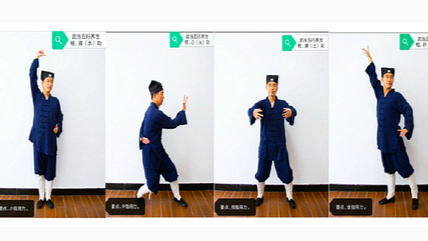
Wu Xing Zhuang
Introduction
Wu Xing Zhuang, also known as Wu Xing Zhuang Gong, is a traditional Chinese form of Qigong exercise that embodies the Taoist philosophy of Wu Xing, or the Five Elements. This exercise integrates physical movements with mental focus and deep breathing, forming a set of standing-stance exercises rooted in ancient Taoist health principles. Designed to enhance both physical health and mental well-being, Wu Xing Zhuang has been practiced for centuries, gaining popularity as an effective indoor exercise. The practice involves a series of postures that correspond to the Five Elements—water, wood, fire, earth, and metal—each associated with specific organs and bodily functions.
Historical Background
The origins of Wu Xing Zhuang are often associated with Lyu Dongbin, a revered Taoist priest from the Tang Dynasty (618-907) and one of the Eight Immortals in Chinese legend. While Lyu Dongbin is not historically documented as the founder of the Chunyang Sect or any specific martial arts school, his teachings and influence later inspired the development of the Chunyang Sect, a significant branch of Wudang Taoist kung fu. Wudang kung fu, known for its emphasis on internal energy cultivation, is often compared to the famed Shaolin kung fu. However, rather than being direct competitors, they represent different approaches and cultural philosophies within Chinese martial arts. Lyu Dongbin is attributed with creating several Taoist health and fitness regimens, including Wu Xing Zhuang. Historically, these techniques were preserved as esoteric arts passed down through generations of dedicated Taoist practitioners.
The tradition of exclusive transmission continued until the early 1980s when Liu Lihang, a grandmaster of the Chunyang Sect, decided to disseminate these teachings more widely. By sharing Wu Xing Zhuang and other Taoist practices with lay practitioners and the general public, Liu Lihang broke the long-standing custom of single-person inheritance. Consequently, Wu Xing Zhuang became more accessible, and its methods were documented and shared through various media, thereby expanding its reach and influence.
Philosophical Concepts
The Five Phases
The Wuxing or the Five Elements theory is a fundamental aspect of traditional Chinese philosophy, encompassing a cyclical understanding of the natural world. The five elements—water, wood, fire, earth, and metal—are believed to represent different phases of transformation, existing in a dynamic, interrelated system. In the context of Wu Xing Zhuang, each element corresponds to a particular stance, which is thought to regulate the functions of specific organs and body systems. For instance, water is linked with the kidneys and urinary system, wood with the liver and digestive system, fire with the heart and circulatory system, earth with the spleen and pancreas, and metal with the lungs and respiratory system.
Dynamic Interactions
The Wuxing theory emphasizes interactions among the elements, characterized by generating and overcoming cycles. Water generates wood, wood generates fire, fire generates earth, earth generates metal, and metal generates water. Meanwhile, each element overcomes another—metal overcomes wood, wood overcomes earth, earth overcomes water, water overcomes fire, and fire overcomes metal. These interactions are mirrored in the practice of Wu Xing Zhuang, where practitioners perform the five stances in specific sequences to balance the energies within the body. By following these sequences, individuals can enhance their physical health and restore equilibrium, promoting both physical and psychological well-being.
Influence on Chinese Culture
Traditional Medicine
Wu Xing Zhuang is deeply rooted in the principles of traditional Chinese medicine, where the Five Elements theory is integral to understanding the human body and its functions. Each element is associated with specific organs and physiological processes, and the practice of Wu Xing Zhuang aims to harmonize these systems. By practicing the corresponding stances, individuals can regulate organ functions, improve circulation, and restore balance between yin and yang energies, thus enhancing overall health and immune function.
Martial Arts
In the realm of martial arts, Wu Xing Zhuang serves as foundational training for practitioners of Taoist kung fu. It is particularly linked to the Wudang martial arts tradition, which emphasizes internal energy cultivation and mental focus. The practice of Wu Xing Zhuang helps martial artists develop physical strength, agility, and mental discipline, integral to mastering various forms of kung fu. It also serves as a complement to other martial arts disciplines, enhancing practitioners' understanding of body mechanics and energy flow.
Wu Xing Zhuang in Contemporary Society
Today, Wu Xing Zhuang continues to gain popularity both in China and around the world as an effective method for promoting health and wellness. Its holistic approach, combining physical exercise with mental focus and breath control, resonates with modern health and fitness trends. People from diverse backgrounds have turned to Wu Xing Zhuang to improve their physical strength, mental clarity, and emotional balance. The practice has also found a place in contemporary fitness culture, with variations being developed to suit different needs and preferences, ensuring its relevance in the modern era.








